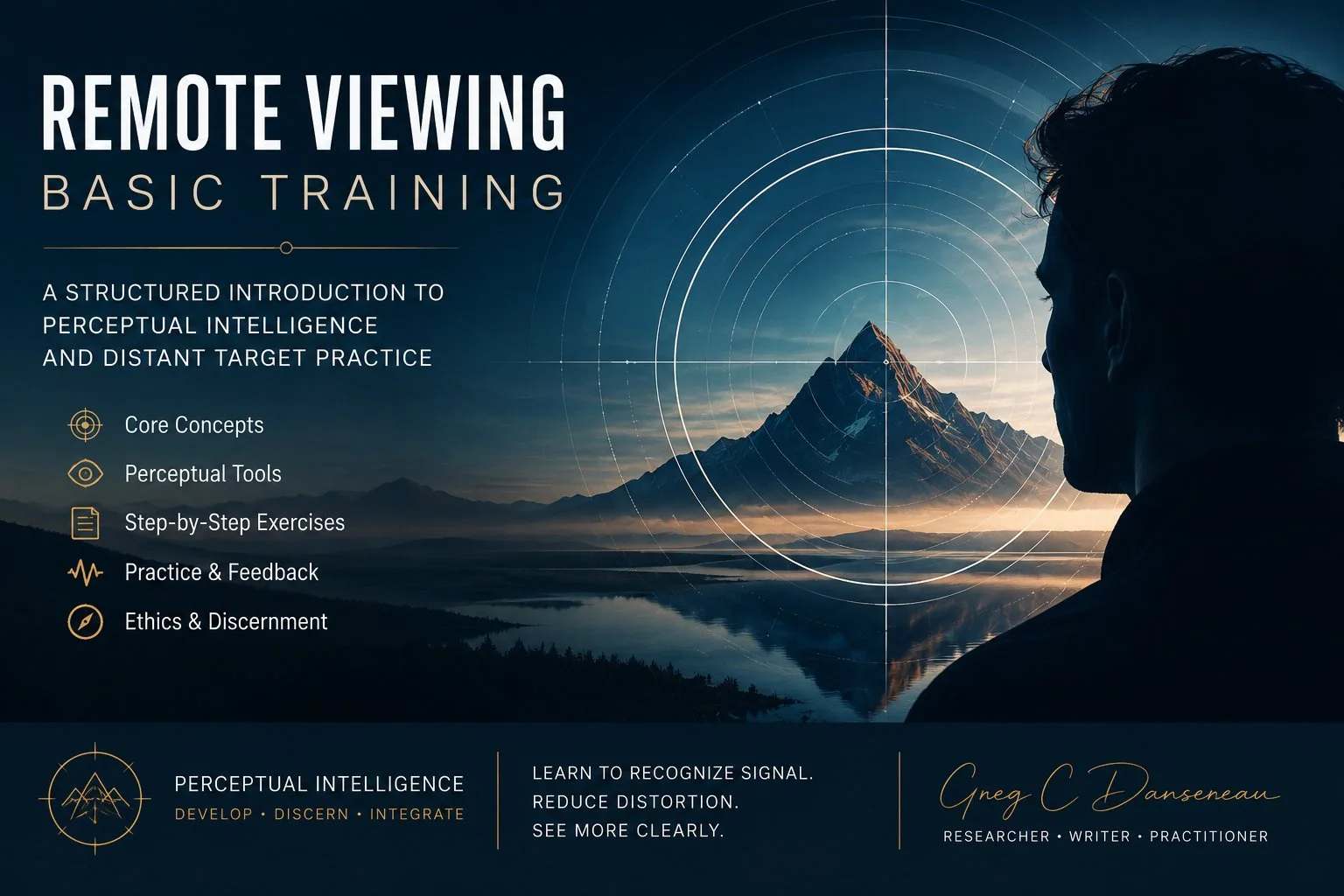
Perception Is the First Form of Intelligence
Perceptual intelligence is the human capacity to recognize patterns, meaning, and information within complex environments — often before those patterns become consciously obvious.
It operates at the intersection of attention, intuition, and awareness — shaping how we interpret situations, people, and complex systems.
While often associated with intuition, perceptual intelligence is not vague or mystical. It is a structured capability that can be developed, refined, and applied.
Most discussions of intelligence focus on analysis: logic, reasoning, and the ability to process information quickly. These capacities are important, but they are not the first form of intelligence human beings develop.
Before analysis comes perception.

Human beings constantly interpret signals from their environment — emotional cues, subtle shifts in conversation, patterns within institutions, changes in physical environments, and the behaviors of others. Much of this interpretation occurs beneath conscious awareness.
Perceptual intelligence describes the capacity to recognize these signals and interpret them accurately within context.
Rather than being mystical or abstract, perceptual intelligence is simply the human ability to detect meaningful patterns in experience.
What Is Perceptual Intelligence?
Perceptual intelligence is the capacity to recognize and interpret patterns, signals, and meaning within complex environments.
It operates through the integration of several forms of perception:
sensory perception
emotional awareness
situational awareness
relational pattern recognition
environmental observation
When these forms of perception align, individuals can recognize meaning and direction before analytical reasoning fully explains what is occurring.
This is often what people describe as intuition.
Perception Before Analysis
Analytical reasoning processes information step by step.
Perception works differently.
Perception gathers signals from multiple sources simultaneously and organizes them into patterns.
This is why people often say things like:
“I sensed something was wrong.”
or
“That situation didn’t feel aligned.”
In many cases, perception has already recognized a pattern that analysis has not yet articulated.
Perceptual intelligence therefore acts as a precursor to conscious reasoning.
It allows individuals to orient themselves within complexity before making deliberate decisions.
Why Perceptual Intelligence Matters
Modern life requires people to navigate environments that are increasingly complex.
Institutions evolve quickly.
Information flows constantly.
Social and technological systems interact in unpredictable ways.
Under these conditions, relying exclusively on analysis becomes difficult.
There is often too much information and not enough time to process every detail.
Perceptual intelligence helps individuals detect patterns earlier, recognize emerging dynamics, and respond with greater awareness.
This capacity becomes particularly important in leadership, research, creative work, and personal development.
The Relationship Between Perception and Intuition
Intuition is often described as a mysterious inner voice. But when examined more closely, intuition is usually the result of perception operating below conscious awareness.
The human mind constantly gathers information from experience. Over time, this information forms patterns.
When a new situation resembles previous patterns, the mind can recognize the similarity quickly.
This recognition appears as intuitive insight.
In this way, intuition can be understood as an expression of perceptual intelligence rather than a separate phenomenon.
Intuition is often the felt experience of perceptual intelligence.
When perception is clear, intuition becomes reliable.
When perception is distorted, intuition becomes misleading.
Relationship to Remote Viewing and Consciousness
Perceptual intelligence operates within a broader architecture of consciousness — the way awareness organizes, filters, and interprets experience. As perception becomes more coherent, individuals experience greater clarity, alignment, and understanding.
In Application
Perceptual intelligence is not abstract. It affects:
leadership decisions
relationship dynamics
system navigation
conflict interpretation
personal clarity
Perceptual Development and Self-Discovery
Perceptual intelligence also plays a central role in self-discovery.
As individuals refine their perception, they begin to notice patterns in their own behavior, relationships, and environments.
Experiences that once felt confusing begin to organize into meaning.
Self-discovery therefore does not occur through introspection alone. It also emerges through clearer perception of lived experience.
As perception becomes more coherent, identity and direction become easier to understand.
Perceptual Intelligence and Consciousness
Perception is not only a psychological function. It is part of the broader architecture of human consciousness.
Human awareness integrates multiple streams of information:
analytical reasoning
emotional signals
experiential memory
environmental pattern recognition
When these streams operate in isolation, understanding becomes fragmented. When they integrate, individuals experience greater clarity.
Perceptual intelligence represents one of the key mechanisms through which this integration occurs.
It helps translate experience into meaning.
Developing Perceptual Intelligence
Perceptual intelligence develops gradually through experience.
Activities that strengthen perception often include:
reflective journaling
careful observation of environments
contemplative practices
dialogue with diverse perspectives
engagement with unfamiliar contexts
These experiences expand the range of signals a person can interpret.
Over time, this expanded perception supports deeper understanding, stronger intuition, and clearer decision-making.
The Quiet Intelligence Behind Meaning
Perceptual intelligence rarely receives the same attention as analytical intelligence. Yet it plays a foundational role in how human beings interpret reality.
Before ideas are analyzed, they are perceived.
Before systems are designed, patterns are observed.
Before decisions are made, environments are interpreted.
Recognizing this quiet form of intelligence allows individuals to navigate complexity with greater clarity and awareness.
Perception, in many ways, is the beginning of understanding.
This concept forms part of a broader framework exploring perception, consciousness, and human systems.
Perceptual intelligence is not a fixed trait — it is a capacity that develops through attention, structure, and experience.
This work forms part of the Architecture of Consciousness framework and connects to ongoing research in perception, intuition, and human systems.
Continue Exploring
From Inquiry to Practice
Reading about remote viewing and attempting structured perceptual practice are different forms of inquiry. Remote Viewing Basic Training offers a self-paced introduction to the methods of perceptual discrimination, with particular attention to signal, interpretation, and distortion.