Ahu Huri a Urenga: Four Hands, Stars, and Seasonal Knowledge
An interdisciplinary field investigation of one of Rapa Nui's most distinctive ceremonial monuments. Combining archaeological research, field observation, and cultural context, this documentary explores how Ahu Huri a Urenga may have participated in preserving seasonal knowledge within a broader symbolic landscape.
About This Film
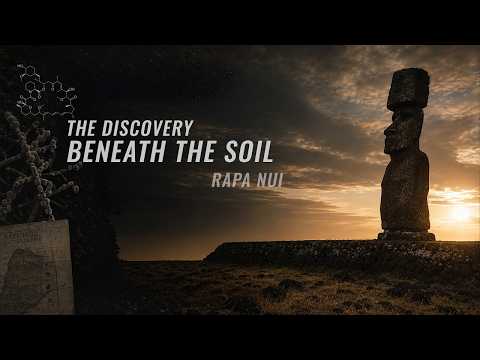
Ahu Huri a Urenga is best known for its unusual moai, often described as having four hands. The monument’s inland position, ceremonial plaza, nearby paved feature, mortuary remains, and possible astronomical relationships distinguish it within the wider cultural landscape of Rapa Nui.
Rather than presenting a single definitive explanation, this film considers the monument structurally.
It asks how its location, orientation, architectural features, sculptural form, and surrounding landscape may have operated together as part of a broader system of knowledge.
The investigation draws distinctions among:
features that remain materially visible at the site;
interpretations proposed in published archaeological and archaeoastronomical research;
cultural traditions associated with the monument;
and questions that remain open.
The result is not an attempt to solve Ahu Huri a Urenga, but to examine how monumental places may preserve knowledge across generations—even when the original system of interpretation is no longer fully accessible.
Central Question
How might Ahu Huri a Urenga have participated in preserving and communicating seasonal knowledge within the cultural landscape of Rapa Nui?
Themes Explored
Monumental Architecture
The film considers the ahu, plaza, moai, paved features, mortuary context, and surrounding terrain as parts of a connected ceremonial environment rather than isolated archaeological objects.
Seasonal Observation
Possible relationships with solar and stellar cycles are examined cautiously, with attention to the difference between documented alignments, published interpretations, and observations requiring further study.
Symbolic Landscapes
The monument is approached as part of a landscape in which architecture, ancestry, environmental observation, and cultural memory may have been brought into relationship.
Knowledge Across Generations
Ahu Huri a Urenga raises a broader question central to the Myth & Symbol research program: how do societies materialize knowledge so it can endure beyond the individuals who first observed or understood it?
Field Observations
The film includes original field observations from Ahu Huri a Urenga, including:
the monument’s inland and elevated position;
the distinctive form of the moai;
the ceremonial plaza extending from the platform;
nearby constructed and mortuary features;
the relationship between architecture and surrounding terrain;
and observations concerning possible seasonal and celestial orientation.
These observations are presented as part of an interdisciplinary inquiry rather than as proof of a single interpretation.
Related Research
This documentary accompanies ongoing research within the Myth & Symbol program.
Related resources include:
Materializing Seasonal Knowledge: A Structural Reading of Ahu Huri a Urenga, Rapa Nui
Myth & Symbol
Perceptual Intelligence
Related Journal Articles