

How Remote Viewing Works: A Clear Breakdown of the Process
The Assumption
Most people assume remote viewing works like intuition:
you feel something
you interpret it
you arrive at an answer
This is incorrect.
Remote viewing is best understood not as intuition—but as structured perception under constraint.
The Actual Structure
Remote viewing works by separating:
perception
interpretation
The process is designed to:
slow down response
remove immediate meaning
capture raw signal first
Step 1: Constraint
The viewer is given a target without context.
This is critical.
Without context:
the mind cannot rely on memory
assumptions are reduced
interpretation is delayed
Step 2: Signal Capture
What appears first is not a clear image.
It is:
fragments
impressions
sensory-like data
These may include:
textures
shapes
movement
spatial relationships
Step 3: Separation
The most important part:
distinguishing signal from interpretation
For example:
signal: “hard, vertical, cool”
interpretation: “a building”
The first is useful.
The second may be wrong.
Step 4: Progressive Structure
The process continues through stages:
recording
sketching
refining
Each stage:
builds on signal
limits interpretation
Why Distortion Happens
Distortion enters when:
the mind tries to complete the picture
narrative forms too early
confidence replaces observation
This is not failure.
It is normal cognitive behavior.
What Improves Accuracy
Not ability.
But:
delaying interpretation
recognizing distortion
returning to signal
Closing
Remote viewing works not because it produces answers.
It works because it:
reveals how perception and interpretation interact
If this shifted how you see things, continue here:
→ Perception vs Intuition: Why Trusting Your Gut Often Fails
This can be learned.
→ Foundations / Perceptual Intelligence
But what it develops goes beyond technique.
It reorganizes how you perceive, interpret, and respond.
If you’re noticing this:
– your perception is becoming sharper
– your intuition is less reactive, but more precise
– you’re seeing patterns you didn’t before
– you feel clearer… but less stable
That’s not confusion.
It’s what happens when perception develops faster than structure.
If this shifted how you see things—
this isn’t something you solve by thinking more.
It’s something you stabilize.
From Inquiry to Practice
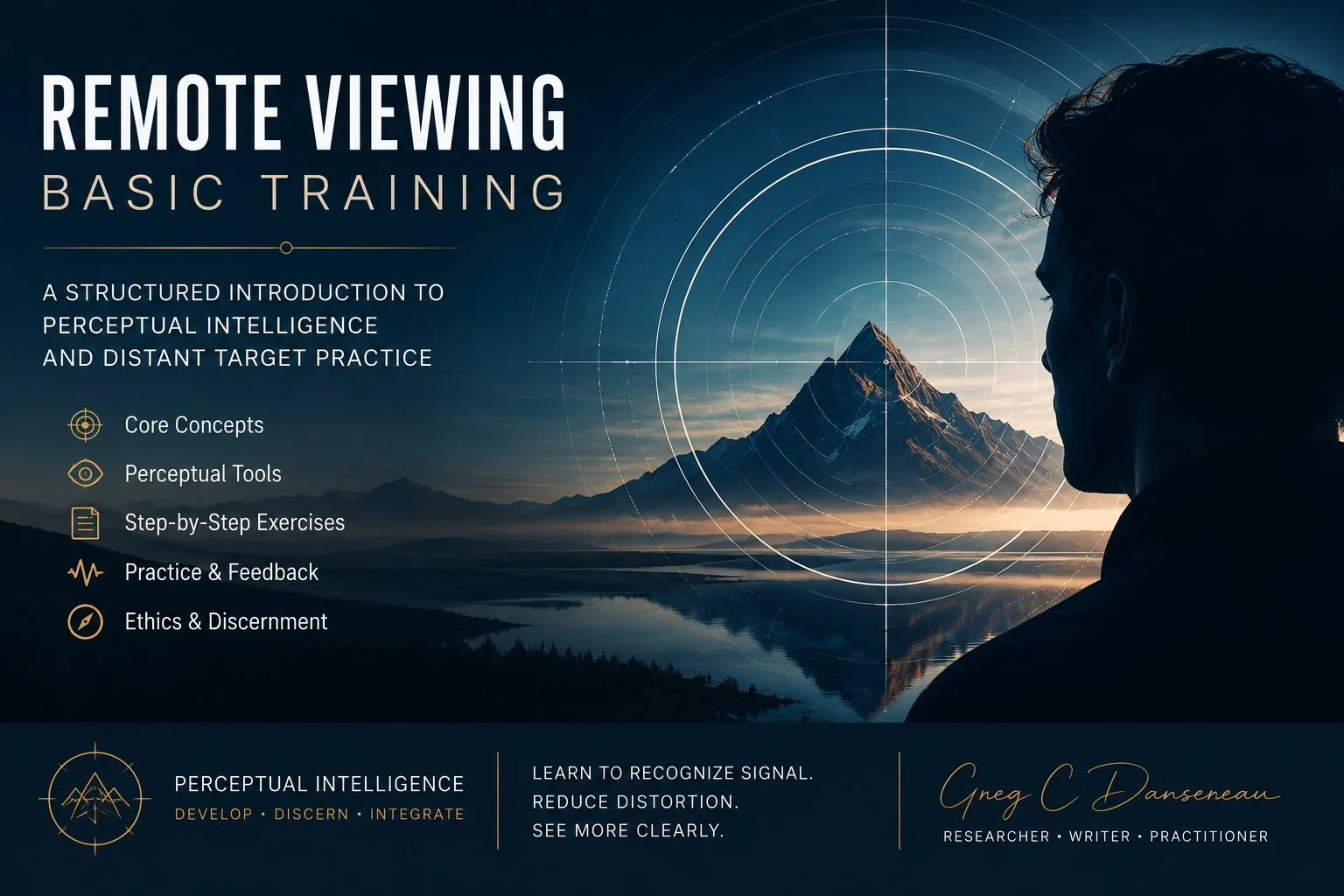
Reading about remote viewing and attempting structured perceptual practice are different forms of inquiry. Remote Viewing Basic Training offers a self-paced introduction to the methods of perceptual discrimination, with particular attention to signal, interpretation, and distortion.
This can be learned.
But what it develops goes beyond technique.
It changes how you see, decide, and move.
More…
