

Renewal Requires Architecture
When institutions strain, imagination intensifies. Some imagine reform. Others imagine fire. But collapse is not renewal. Sustainable transformation requires architecture, capacity, and legitimate succession.
Strong. Direct. No theatrics.
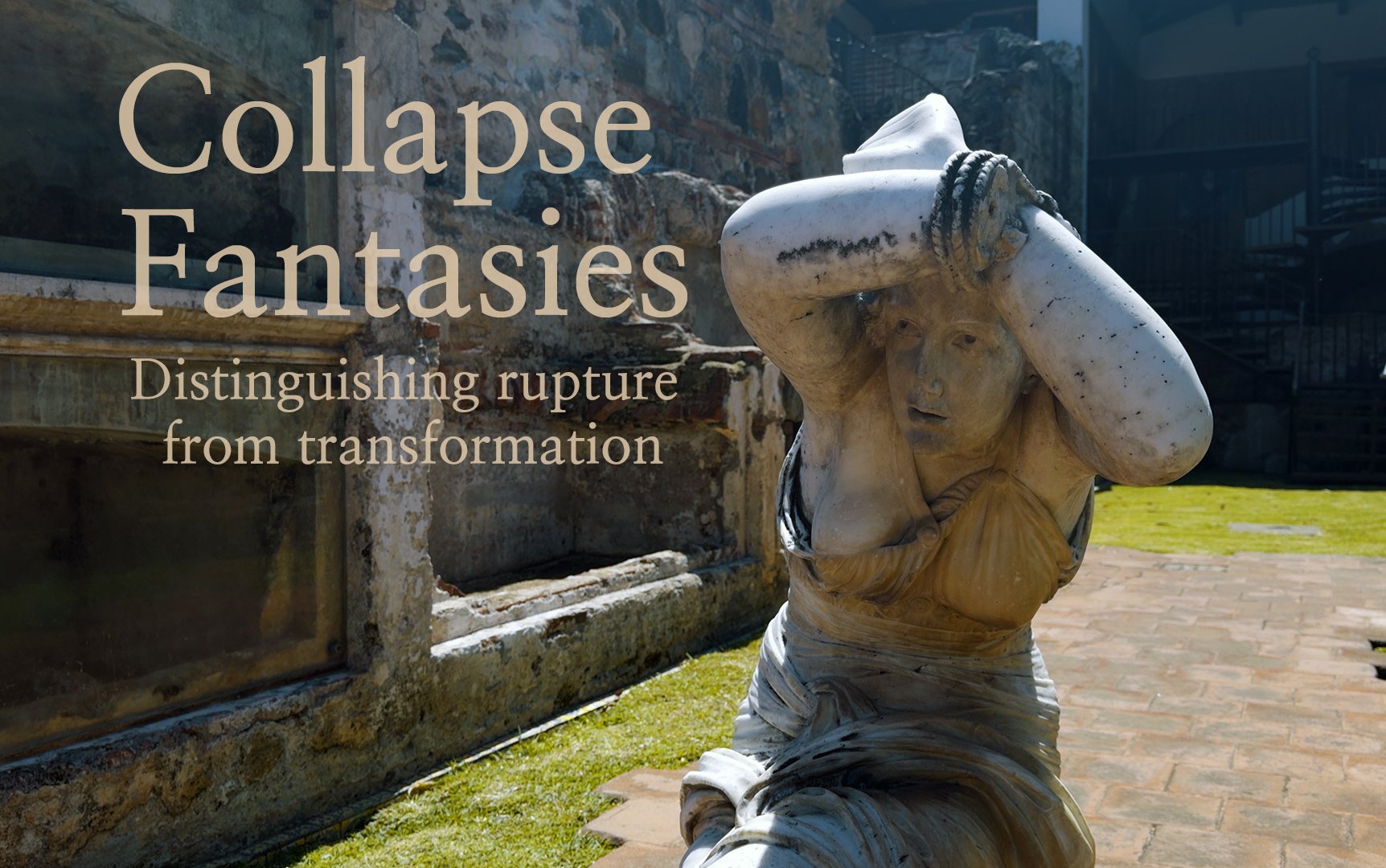
Justice Architecture · Core Essay
Last week, I wrote that most leadership decisions fail at the doorway — not the destination.
The same is true for societies.
We are living in a period of institutional strain. Trust is thin. Legitimacy is questioned. Economic and cultural systems feel unstable. It is not irrational to say that change is needed.
When systems strain, imagination intensifies.
Some imagine redesign.
Others imagine fire.
The difference matters.
Critique Is Not Collapse
There is a growing language of rupture — “burn it down,” “start over,” “new world.”
These impulses are understandable. When structures feel unjust or incoherent, collapse can look like cleansing.
But collapse is not renewal.
Collapse is interruption without design.
Human beings repeatedly mistake release for renewal because destruction produces emotional certainty before it produces structural coherence.
It suspends order without establishing succession.
Sustainable transformation requires more than emotional discharge. It requires architecture.
The Mythic Pattern We Keep Forgetting
Across cultures, destruction is rarely the end of the story.
Consider the figure of Osiris.
In Egyptian myth, Osiris is dismembered and scattered. Order appears shattered. But the story does not end in permanent chaos. The body is gathered, reassembled, and reintegrated. Kingship continues. Cosmic order is restored through reconstruction rather than endless destruction.
The myth encodes something structurally important:
Destruction alone is not renewal.
Renewal requires reconstitution.
Ritual theory echoes the same principle. Ritual does not abolish order; it symbolically breaks and reaffirms it, repeating founding patterns to stabilize the future.
Across mythic traditions, renewal rarely emerges from destruction alone. It emerges through reordering, succession, and reintegration.
Without reassembly, fragmentation persists.
A society can survive periods of uncertainty. What it cannot survive indefinitely is permanent liminality — a condition where old structures are rejected but no legitimate succession emerges. In that space, instability becomes identity rather than transition.
Without reintegration, liminality hardens into instability.
Collapse Fantasies
There is a difference between redesigning a structure and hoping it fails.
Redesign asks:
What must change?
What must remain?
What capacity is required for transition?
Collapse asks:
What can be destroyed?
The first is architectural.
The second is reactive.
When people call for a “new world” without articulating succession models, governance scaffolding, or legitimacy mechanisms, they are imagining rupture without reintegration.
History suggests that unmanaged collapse rarely produces freedom. It produces power vacuums, accelerated hierarchy, and deeper fragility.
Impermanence is real — but impermanence is not annihilation
Letting go of what no longer functions is necessary.
Burning without building is not.
What Renewal Actually Requires
Sustainable renewal requires three things:
Structural clarity
What is being replaced, and with what?
Capacity awareness
Do we have the leadership, procedural, and institutional strength to carry transition?
Legitimate succession
How does authority transfer without coercion?
Without these, transformation becomes volatility.
Fire can clear space.
Only architecture creates a future.
Closing
Change is needed.
But change without design is chaos.
If we want renewal — personal, institutional, or societal — we must move beyond collapse fantasies toward structural reassembly.
Healthy systems do not fear transformation. But they recognize that continuity matters. Renewal is not the absence of structure. It is the capacity to reorganize structure without dissolving legitimacy entirely.
Renewal requires architecture.
Explore Further:
