


JOURNAL
Start Here:
Research, field notes, and public inquiry
This journal is a living record of inquiry into coherence, perception, leadership, and human systems.
It includes essays, reflections, and field notes emerging from ongoing research, lived experience, and symbolic observation. Some entries are exploratory. Others are clarifying. All are written from within the work, not about it.
The journal is organized across several domains of inquiry, each explored through writing rather than instruction.
Domains of Inquiry
• Sacred Pedagogy
Learning as orientation, not accumulation.
• Leadership & Sovereignty
Clarity, agency, and decision-making under complexity.
• Justice Architecture
Structure, fairness, process, and systemic coherence.
• Perceptual Intelligence
Attention, intuition, and non-linear cognition.
• Myth & Symbol
Narrative, archetype, and meaning-making across time.
Foundational reflections on coherence, embodiment, and the developmental spine through which the work unfolds.
Entries may be read sequentially or entered at any point.
There is no required path.
This is a record of inquiry in motion.
New entries are added as the work unfolds.
Lucid Dreaming & the Architecture of Consciousness
Reading the Layers of Civilization
Walking through Cusco, Peru I expected to find history. What I found instead was continuity.
Megalithic foundations, Incan stonework, and Spanish colonial architecture stand together in the same landscape, each representing a different chapter in the story of human civilization. Rather than asking only who built these structures, I found myself asking a different question:
What happens when one civilization inherits the sacred places of another?
Over time, this simple observation became something much larger. It evolved into questions about institutional succession, legitimacy, and the visible layers through which societies preserve, replace, and reinterpret meaning.
Sometimes the landscape becomes the teacher.
The Myth of Neutral Knowledge
Modern institutions often present knowledge as neutral and objective. Yet research, law, and governance are all produced by human actors interpreting the world through lived experience. If emotion and perspective are already present in knowledge production, the real question may not be how to eliminate them, but how to account for them transparently.
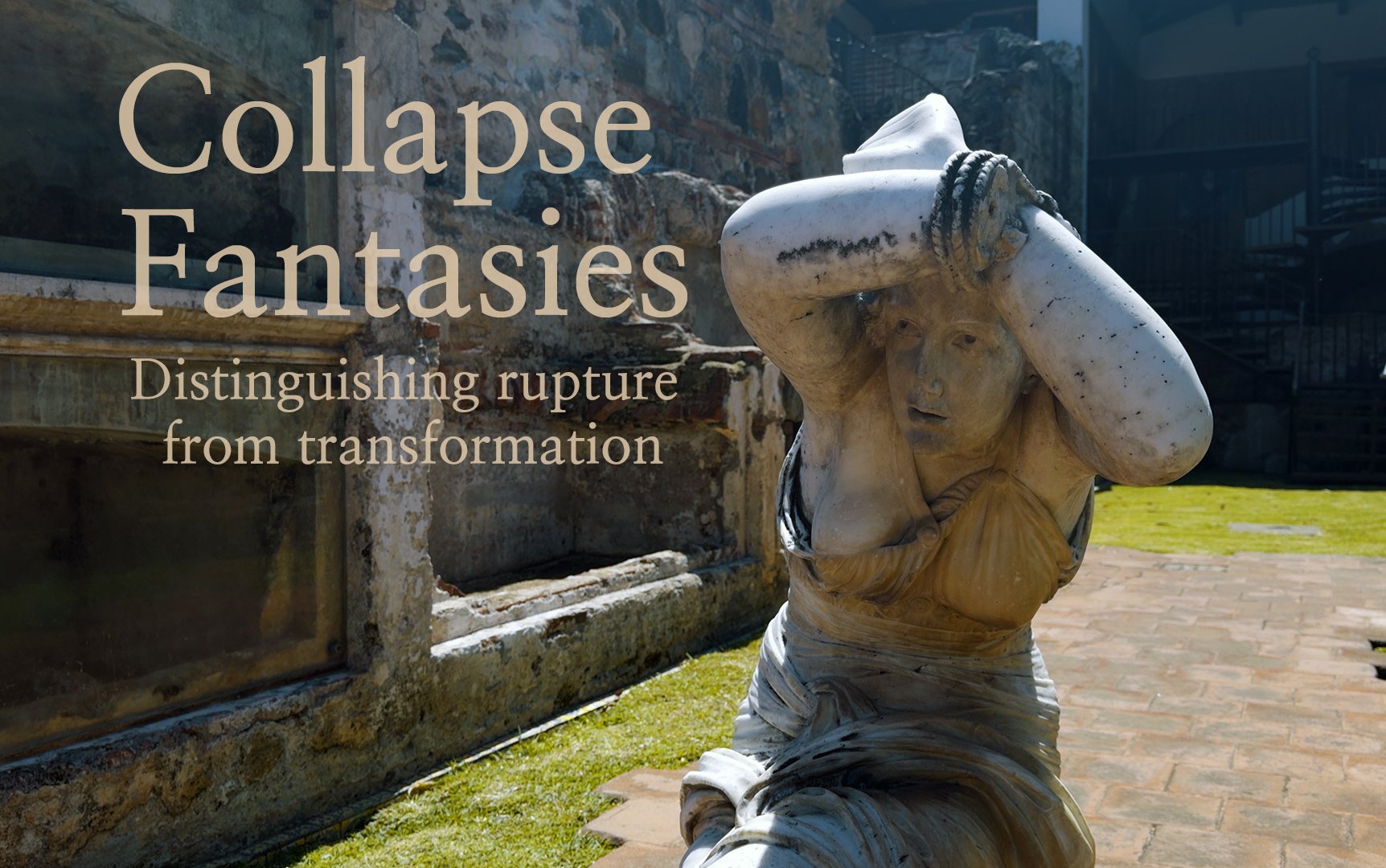
Renewal Requires Architecture
When institutions strain, imagination intensifies. Some imagine reform. Others imagine fire. But collapse is not renewal. Sustainable transformation requires architecture, capacity, and legitimate succession.
Strong. Direct. No theatrics.
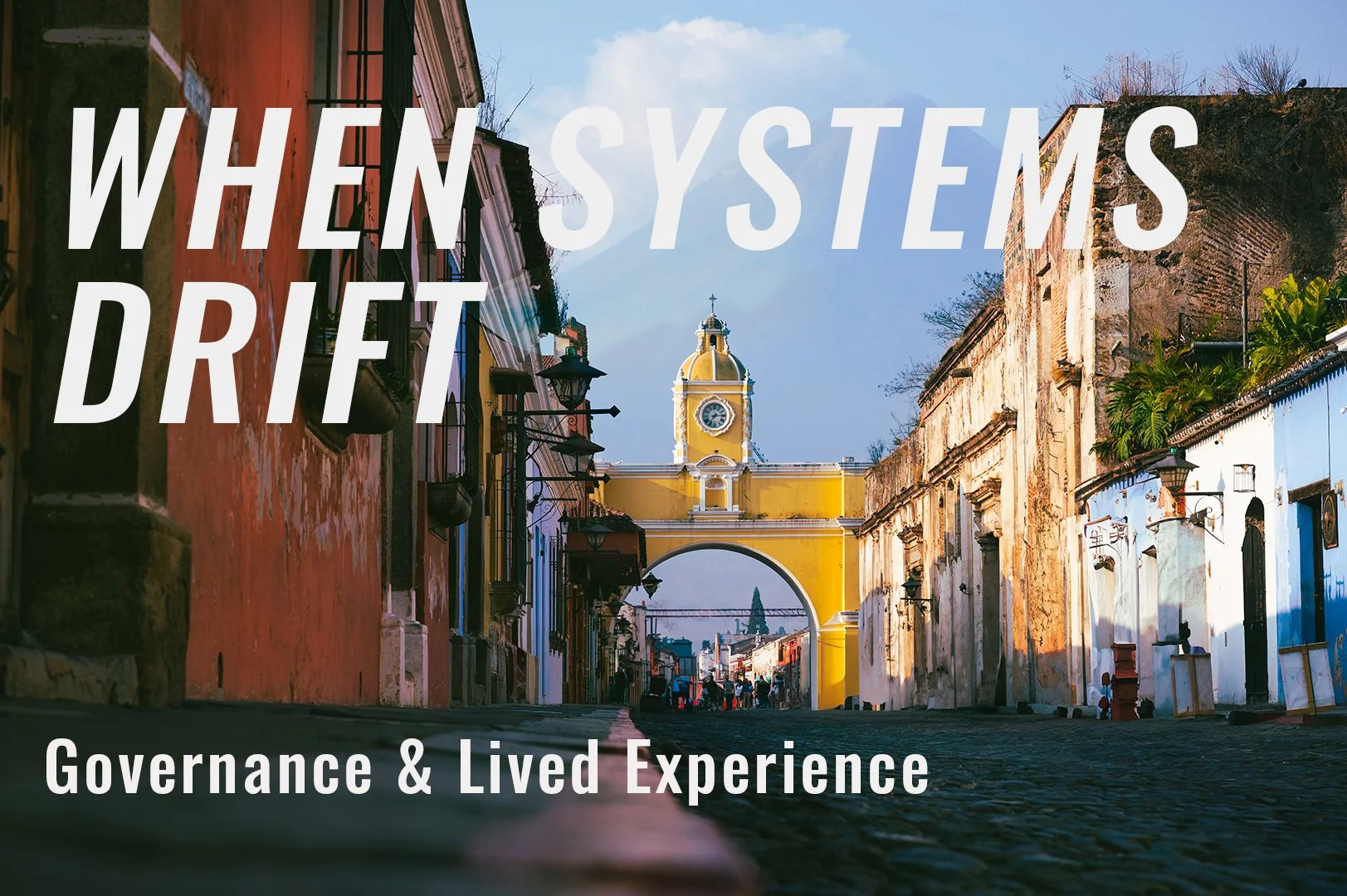
When Systems Drift
Most systems do not fail all at once. They continue functioning operationally while something more difficult to measure begins to shift: trust, interpretation, and the relationship between institutional structure and lived human experience. This audiovisual essay explores that tension through the theoretical lenses of Street-Level Bureaucracy and Co-Creation, asking whether operational effectiveness alone is sufficient for institutional legitimacy under conditions of sustained complexity and constraint.