

Development of the Frameworks: From Nine Pillars to Human Coherence
Development of the Frameworks
From Nine Pillars to Human Coherence
What follows is not the history of separate ideas, but the development of a single inquiry viewed through different frameworks as new questions emerged.
When people first encounter my work, they often see individual frameworks—Nine Pillars, Perceptual Intelligence, Architecture of Consciousness, Justice Architecture, or Sacred Pedagogy—and understandably assume they were developed as separate ideas.
They were not.
Each emerged from the same ongoing inquiry, evolving over time as new experiences, disciplines, and questions revealed deeper patterns.
This article documents that evolution—not as a finished theory, but as the continuing development of an interdisciplinary research program.
The Beginning: Observation Before Theory
The earliest work became known as the Nine Pillars.
At the time, I was not attempting to construct a comprehensive theory of leadership, consciousness, or human development.
I was simply noticing recurring patterns.
Across indigenous traditions, ancient cultures, natural landscapes, mythology, leadership, and everyday life, certain principles appeared repeatedly.
Rather than beginning with abstract philosophy, the Nine Pillars emerged through observation.
They became a way of organizing recurring human experiences into a coherent lens for understanding how people relate to themselves, one another, and the world around them.
Looking back, the Nine Pillars were less a destination than a beginning.
Operational Leadership Changed the Questions
More than two decades working within safety-critical operational environments introduced a different set of questions.
How do people make decisions under pressure?
Why do experienced professionals sometimes misinterpret reality?
How do organizations remain coherent while adapting to change?
These questions shifted the focus from symbolic meaning toward perception itself.
The challenge was no longer simply understanding patterns.
It became understanding how patterns are perceived in the first place.
Perception Before Interpretation
This realization eventually became Perceptual Intelligence.
Rather than treating perception as passive, the framework proposes that perception is an active, trainable capacity.
Human beings rarely experience reality directly.
Instead, perception unfolds under conditions of uncertainty, incomplete information, emotional pressure, fatigue, expectation, and narrative bias.
One recurring insight gradually became central:
The ability to distinguish signal from interpretation may be one of the most important capacities humans can develop.
Perceptual Intelligence therefore became less about intuition and more about disciplined observation, reducing distortion before judgment.
From Perception to Structure
As the work continued, another question emerged.
If perception shapes experience...
How is experience itself organized?
This question led to the development of the Architecture of Consciousness.
Rather than asking What is consciousness?, the framework asks:
How is human consciousness organized?
Within this model, coherence is understood not simply as emotional calm, but as a structural condition in which perception, identity, meaning, and action become increasingly aligned.
Periods of fragmentation are therefore understood less as personal failure than as moments in which existing structures of meaning are being reorganized.
From Individuals to Institutions
The same questions eventually expanded beyond individuals.
If people can become coherent—or incoherent—can institutions?
This became the foundation for Justice Architecture.
Justice is approached not only as legal process or moral philosophy, but as a question of institutional coherence.
How do organizations perceive?
How do they interpret information?
How do systems learn?
How do institutions maintain legitimacy while adapting to complexity and change?
Here the inquiry moves from personal coherence toward collective coherence.
Learning as Orientation
As these frameworks matured, another realization emerged.
Knowledge alone does not necessarily produce transformation.
People may gain insight without developing greater clarity.
This led to Sacred Pedagogy.
Within this framework, learning is understood less as information transfer than as orientation.
Education becomes the gradual development of perception, judgment, and the capacity to navigate increasing complexity without losing coherence as illustrated in Figure 1.
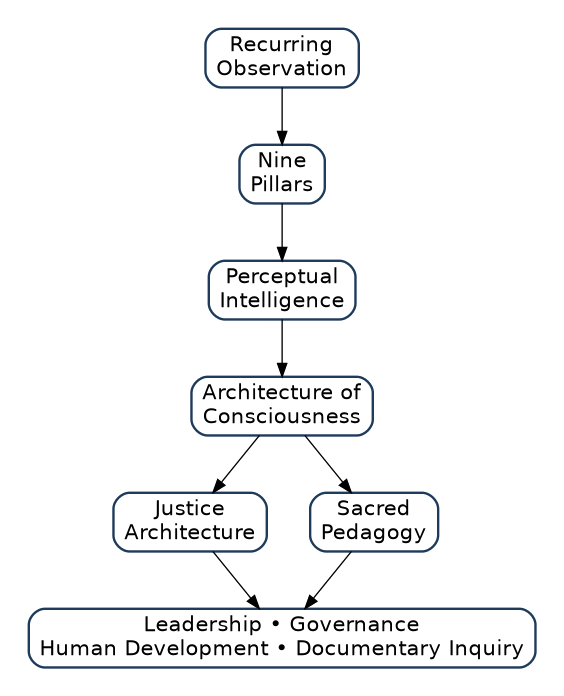
Figure 1. Intellectual Genealogy of the Research Frameworks.
The frameworks presented throughout this website emerged through a continuous process of observation, operational practice, interdisciplinary study, and iterative refinement. Each framework extends the inquiry rather than replacing the ones that preceded it.
One Inquiry, Multiple Frameworks
Looking back, these frameworks are not independent theories.
They are different perspectives within a single evolving inquiry.
Nine Pillars became the observational foundation.
Perceptual Intelligence explores how perception develops.
Architecture of Consciousness examines how human experience becomes structurally organized.
Justice Architecture applies these principles to institutions and governance.
Sacred Pedagogy considers how these capacities are cultivated through learning.
Each framework extends rather than replaces the one before it.
An Ongoing Research Program
None of these frameworks should be understood as finished.
Research continues through academic study, documentary fieldwork, operational experience, writing, and interdisciplinary collaboration.
The goal has never been to construct a belief system.
It is to better understand how human beings and human systems navigate uncertainty, perceive reality, organize meaning, and cultivate greater coherence.
The inquiry continues.
Continue exploring:
